Green Energy Generation
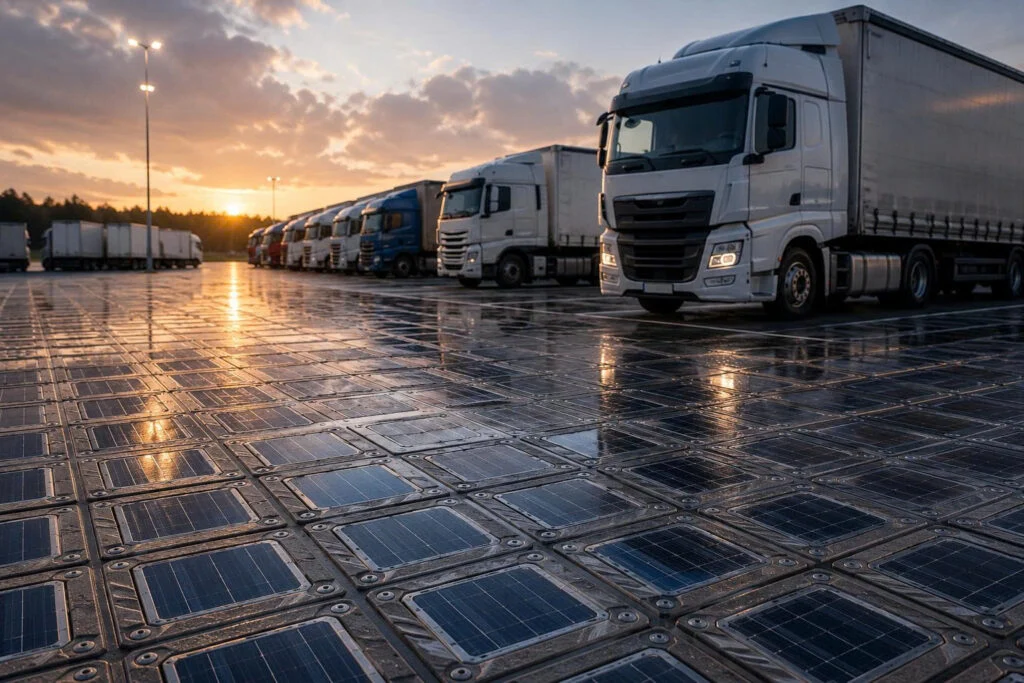
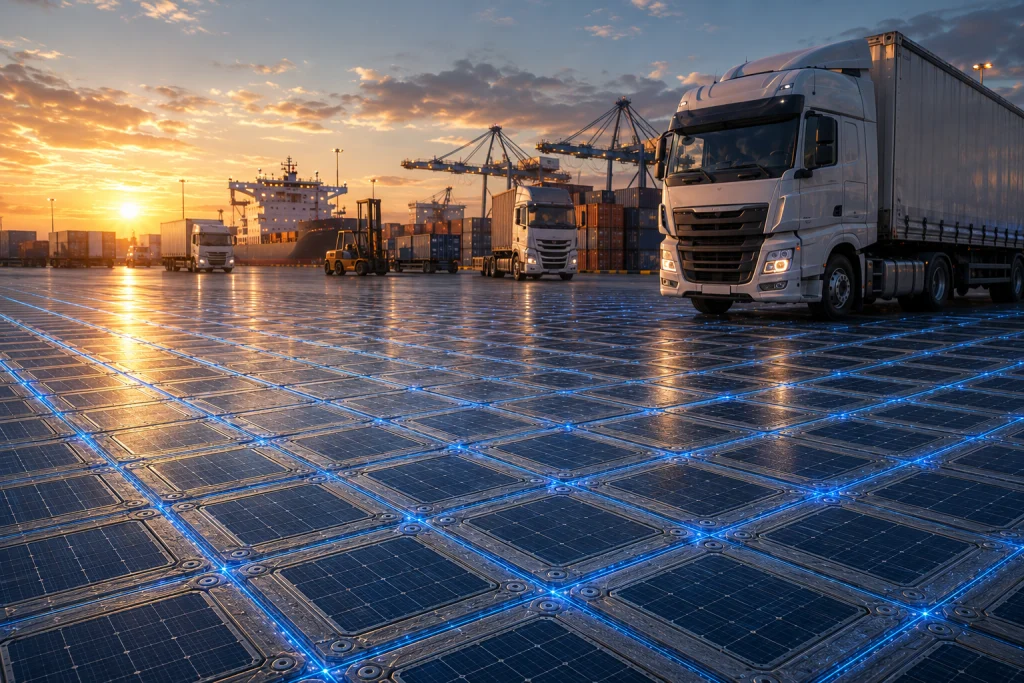
Fusion Cube transforms paved ground surfaces into productive renewable-energy infrastructure. By integrating photovoltaic technology directly into modular, load-bearing ground units, the system enables parking areas, logistics yards, ports, campuses, and other hardscaped environments to generate clean electricity without requiring additional land or conventional rooftop space.
1. Ground-Integrated Solar Technology
Fusion Cube combines a durable traffic-rated surface with integrated photovoltaic cells. The solar layer is protected within a modular structural unit designed for installation at ground level.
The system is intended to:
- Generate renewable electricity from existing paved areas
- Operate across a range of outdoor and low-light conditions
- Protect the photovoltaic components from moisture, impact, and daily surface use
- Allow individual modules to be inspected, maintained, or replaced when required
Where perovskite photovoltaic technology is specified, final output and performance depend on the selected cell configuration, site conditions, system design, and certification requirements.
2. High-Yield Energy Production
A Fusion Cube installation converts underutilized ground surfaces into distributed energy-generating assets.
A 1,000 m² installation is designed to generate approximately 80,000–120,000 kWh of electricity per year, depending on solar exposure, geographic location, shading, system efficiency, and operating conditions.
The electricity generated can support a wide range of on-site uses, including:
- Building and facility operations
- Lighting and monitoring systems
- Electric-vehicle charging infrastructure
- Pumps, sensors, and water-management equipment
- Connection to an energy management system or local electrical network
Actual performance should be confirmed through project-specific energy modelling.
3. Efficient Use of Existing Space
Fusion Cube helps address the challenge of increasing renewable-energy demand in locations where rooftop space or undeveloped land is limited.
Instead of allocating new land for a conventional solar farm, the system can be integrated into existing or planned paved areas, such as:
- Ports and container yards
- Truck stops and logistics facilities
- Industrial sites
- Commercial parking areas
- Corporate and educational campuses
- Public plazas and transport infrastructure
The modular platform is installed flush with the surrounding ground surface, allowing the area to remain accessible for vehicles and pedestrians.
4. Heavy-Duty, Modular Infrastructure
Fusion Cube is designed as more than a solar panel. It is a modular infrastructure platform that combines energy generation with structural performance.
Depending on the project specification, the system can be engineered for passenger vehicles, commercial traffic, and heavy-duty operational environments. Load capacity, surface design, foundation requirements, and compliance standards must be determined through site-specific structural engineering.
Its modular construction also allows individual units to be accessed or replaced without removing the entire installation.
5. Measurable Carbon Reduction
Electricity generated by Fusion Cube can reduce dependence on grid electricity produced from fossil fuels. For a 1,000 m² installation, the estimated annual carbon benefit may reach approximately 53,000–80,000 kgCO₂e, depending on actual electricity generation and the emissions factor of the local power grid.
Carbon savings should therefore be calculated using:
- Verified energy-production data
- The applicable local grid-emissions factor
- Clearly defined reporting boundaries
- Recognized carbon-accounting methodologies
This provides a more transparent and defensible basis for ESG reporting and decarbonization planning.
6. Real-Time Monitoring and Performance Data
Fusion Cube can be connected to an Energy Management System to track project performance in real time.
The monitoring platform may display:
- Total number of installed cubes
- Active, offline, and maintenance-required units
- Current and cumulative electricity generation
- Estimated carbon emissions avoided
- Water captured or stored, where water-management modules are installed
- System alerts, maintenance status, and project-level performance
This data helps operators monitor system health, identify underperforming modules, plan maintenance, and produce clearer sustainability reports.
7. A Multifunctional Infrastructure Platform
Fusion Cube is designed to combine several functions within the same ground area. Depending on the selected configuration, a project may integrate:
- Renewable-energy generation
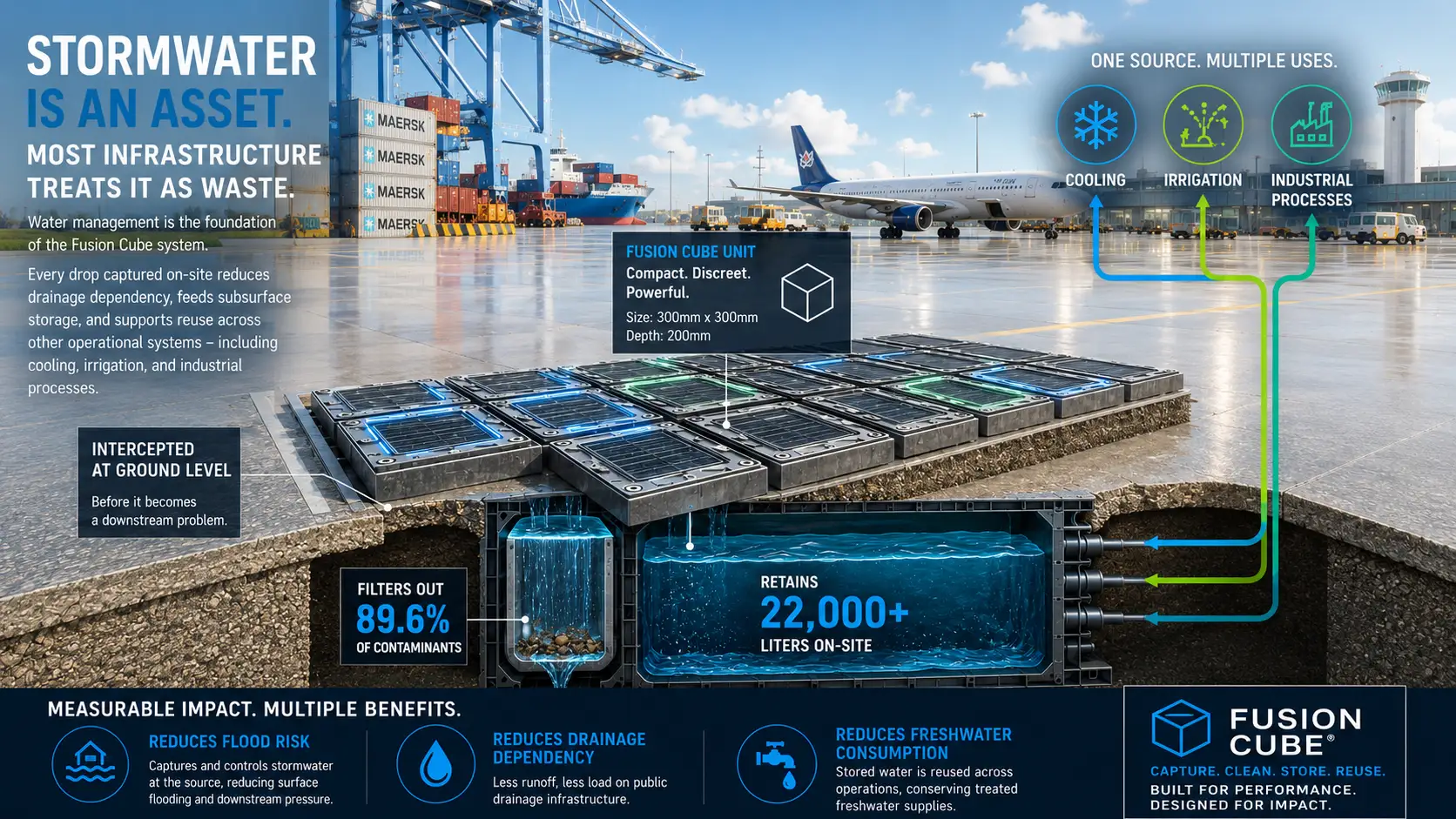
- Stormwater capture and storage
- Drainage and water reuse
- IoT monitoring
- Traffic and safety sensors
- Heavy-load structural support
- EV-charging readiness
By turning ordinary paved surfaces into measurable energy and environmental assets, Fusion Cube supports more efficient land use and helps infrastructure owners progress toward their energy, resilience, and ESG objectives.